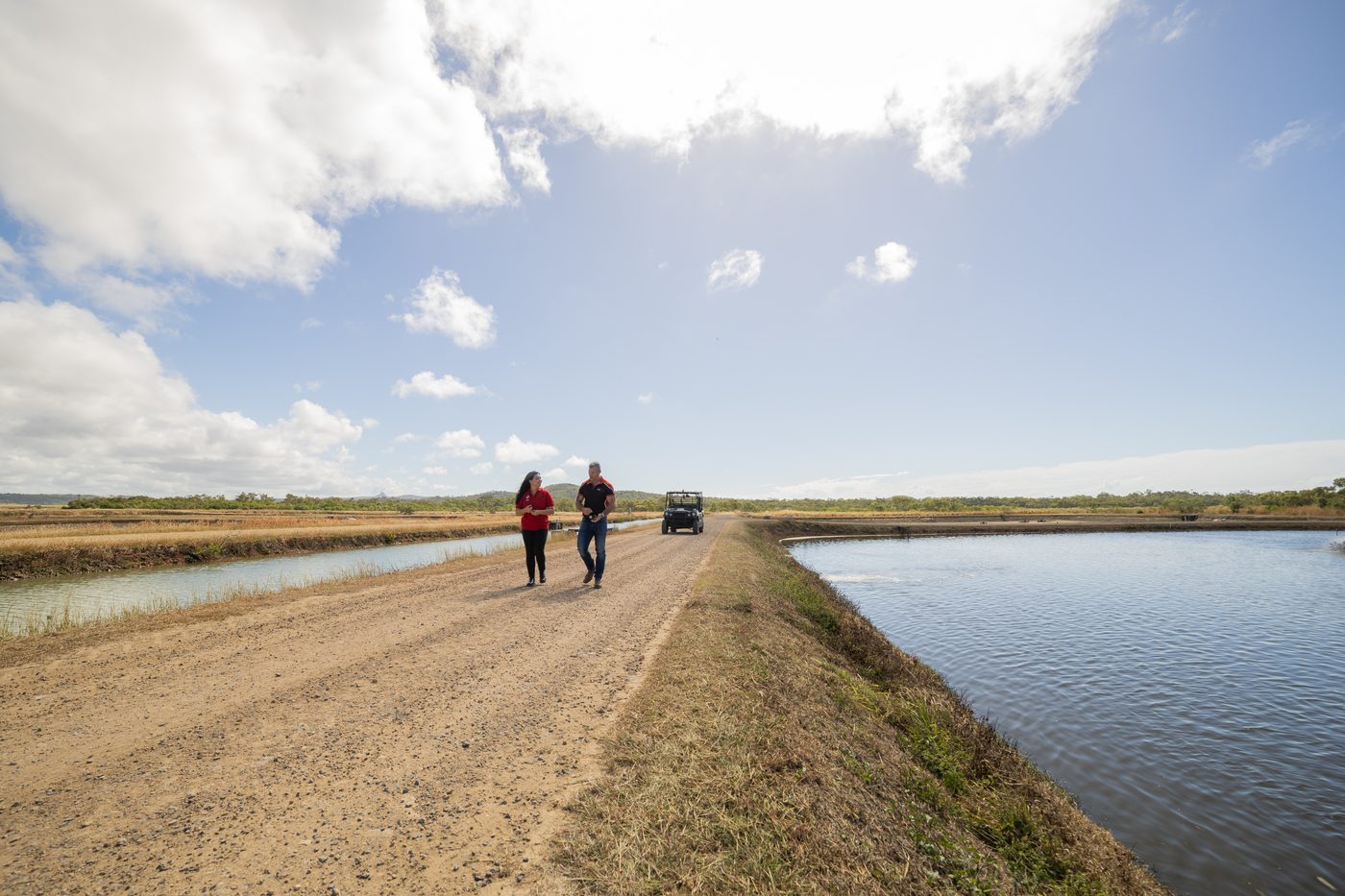
Most commercial shoots come with a clear use case. A product on a white background, a team against a company wall, a site with equipment in frame. This one was different. Coles needed photographs that showed something real: that the people producing the prawns that end up on Coles shelves are working in good conditions, on a well-run farm, and in a genuine relationship with the people buying their product. Ethical sourcing content. The kind of photography that has to be authentic, because the whole point is that it can't be manufactured.
That's a harder brief than it sounds. You can't fake that kind of image. You have to actually be in the right place at the right time, with the right people doing real things.
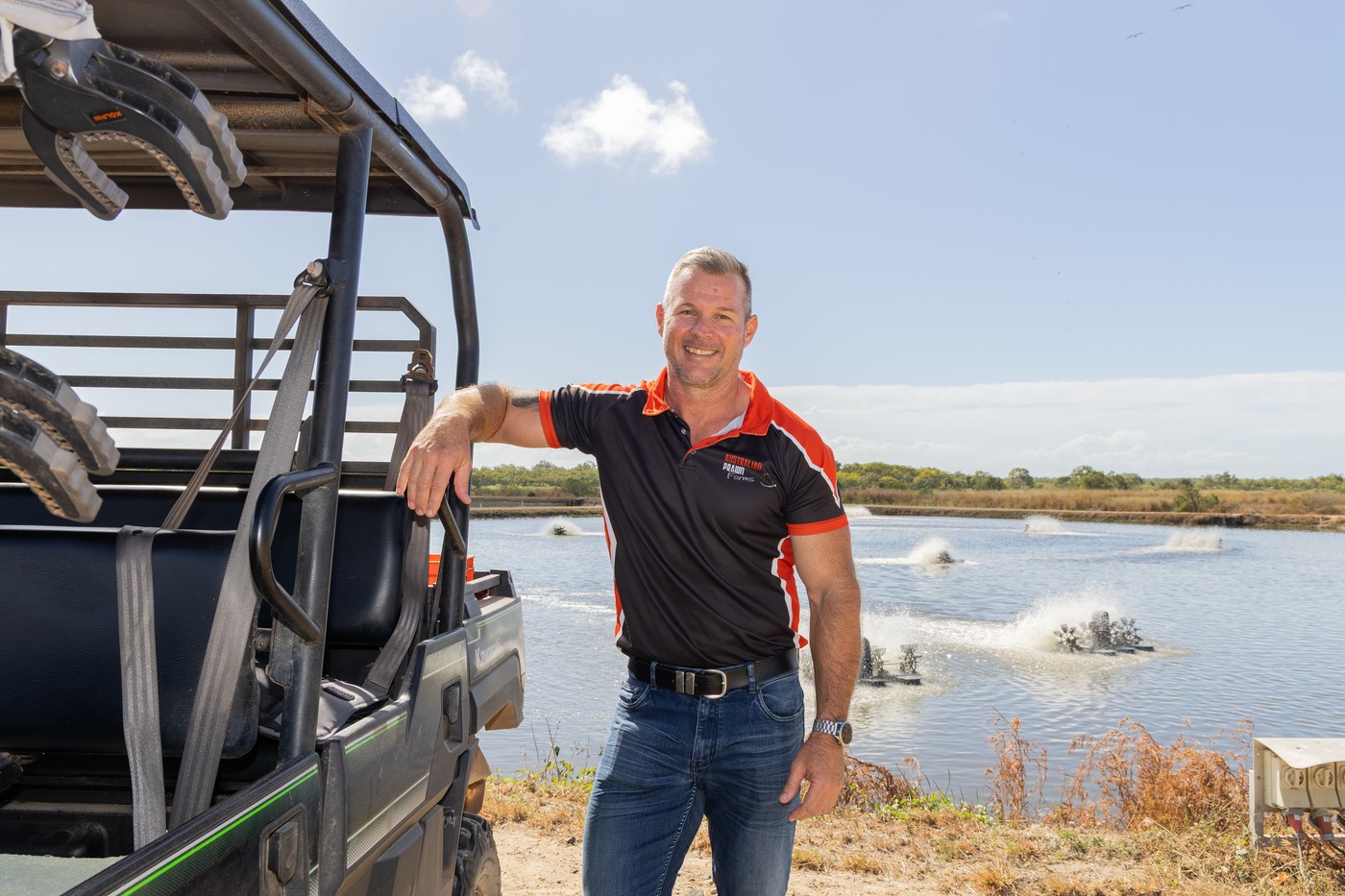
The grow-out ponds at Australian Prawn Farms. Aerators run around the clock to keep oxygen levels up.
The location
Australian Prawn Farms sits at Notch Point Road, Ilbilbie, about an hour south of Mackay along the Bruce Highway. It's a substantial operation: large saltwater grow-out ponds stretching across flat coastal country, a mix of bush and cleared land with the Connors Range in the background on a clear day. The scale of it is immediately obvious when you arrive. These aren't backyard aquaculture tanks. They're proper commercial ponds with aerators running to keep oxygen levels up and trucks moving feed along the levee banks.
A member of Coles' ethical sourcing team was on site for the day. Her visit was the real story. Not a staged inspection. A genuine working relationship between a major retailer and a Queensland producer. My job was to document it as naturally as possible.
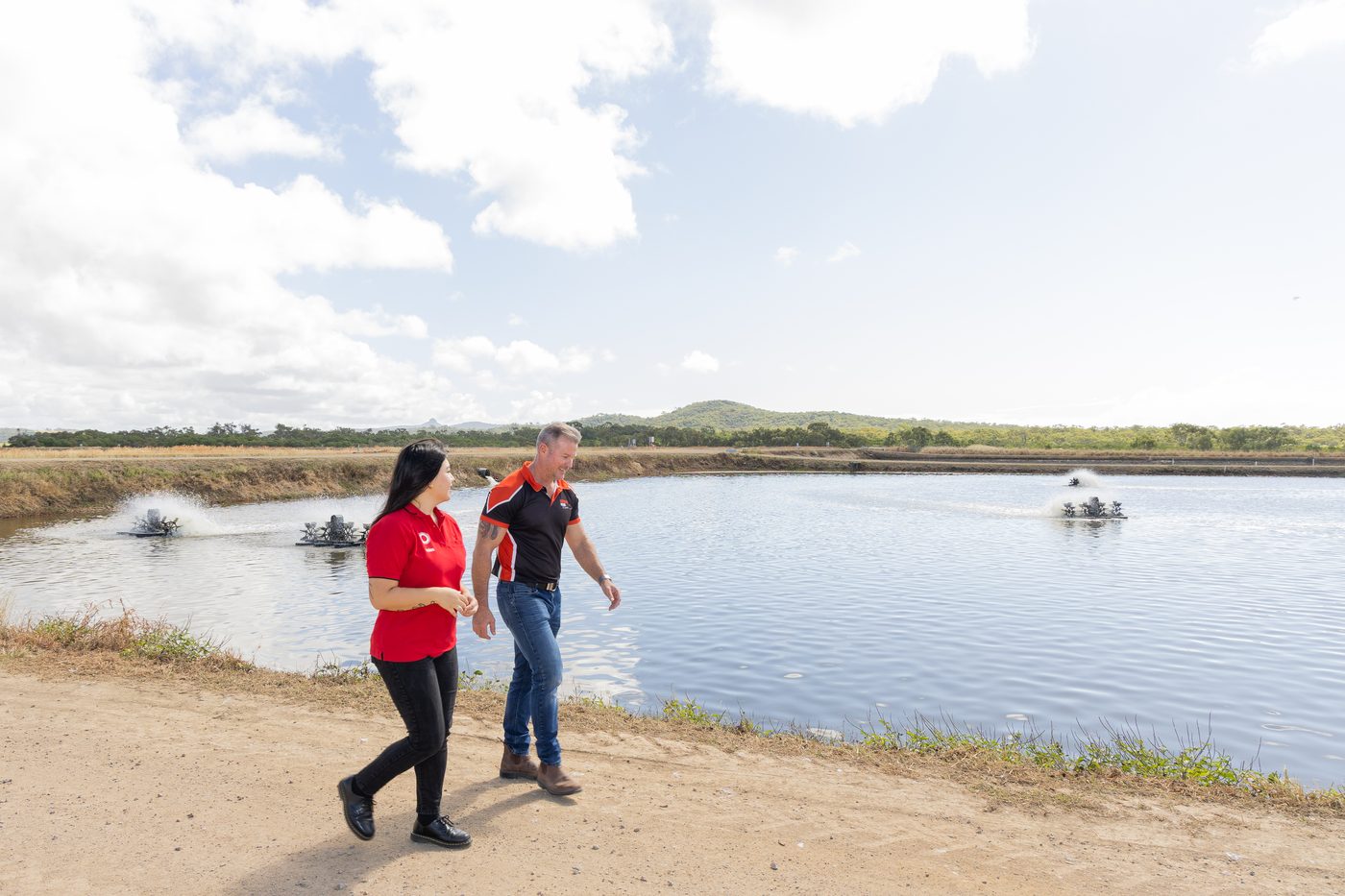
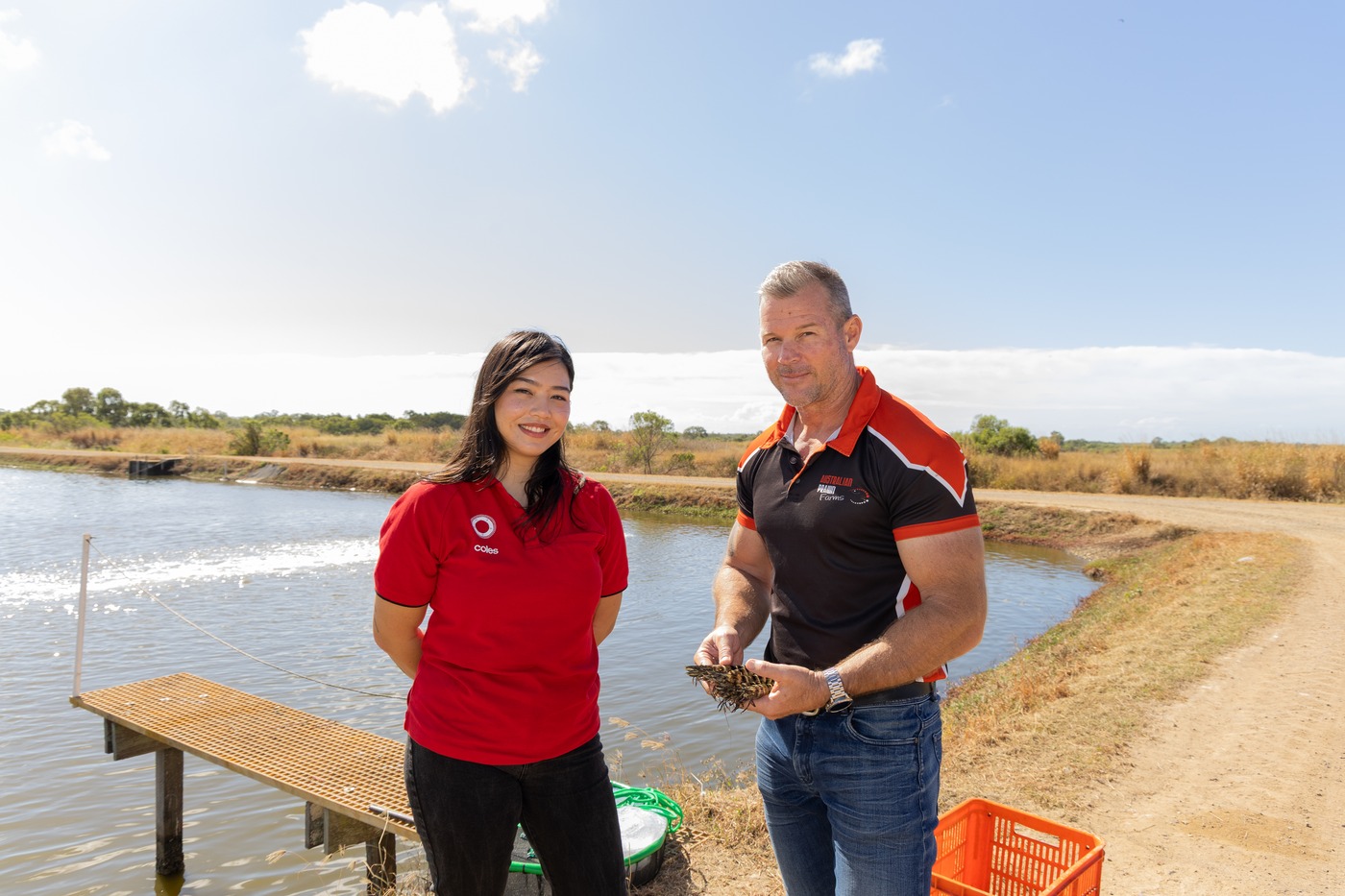
On the levee bank, mid-morning. The farm operator pulled a handful of prawns from the net to show what they'd caught.
What the brief asked for
Coles' brief was detailed. They wanted a mixture of portraits and landscapes, people looking at camera and engaging with each other, talent smiling and interacting, faces visible, no sunglasses, relaxed rather than posed. They also wanted shots of the farm operations themselves: the ponds, the equipment, the workers, and close-up produce shots of the prawns fresh from the water.
The end use matters for how you shoot. These images were headed for corporate reporting, Coles.com.au and social channels. That's a wide spread of formats. Landscape images, portrait images, detail shots and wide establishing shots all needed to come out of the same two-hour window.
"The brief was simple on paper: show a genuine relationship between a major retailer and a Queensland prawn farmer. The challenge was capturing it without making it look arranged."
The cast net shot
One of the moments from the morning was the cast net. The farm operator throwing a net from the pontoon to pull up a sample of prawns. It's routine farm management, done every day. But it photographs well. There's movement, light, a clear sense of actual work happening. Those are the moments worth being on location for.
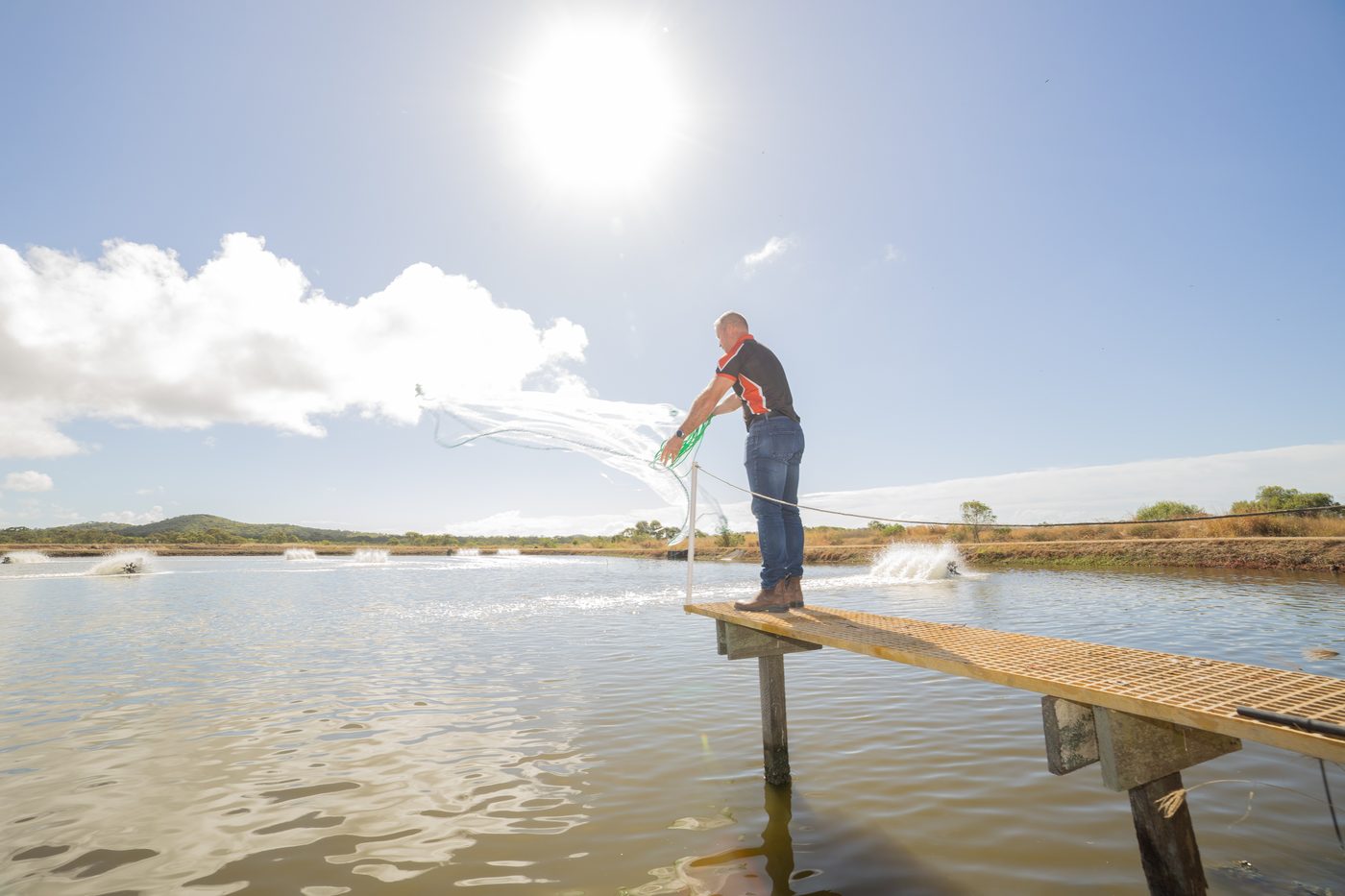
The cast net. Routine farm management that happens to look great in a photo.
The produce shots
Once the net came back in, we had fresh prawns to work with. Black tiger prawns, straight from the grow-out pond. There are maybe four minutes before they go back in the water, so you work quickly. No ice, no set dressing, no styling. Just the actual product in the actual place it's grown.
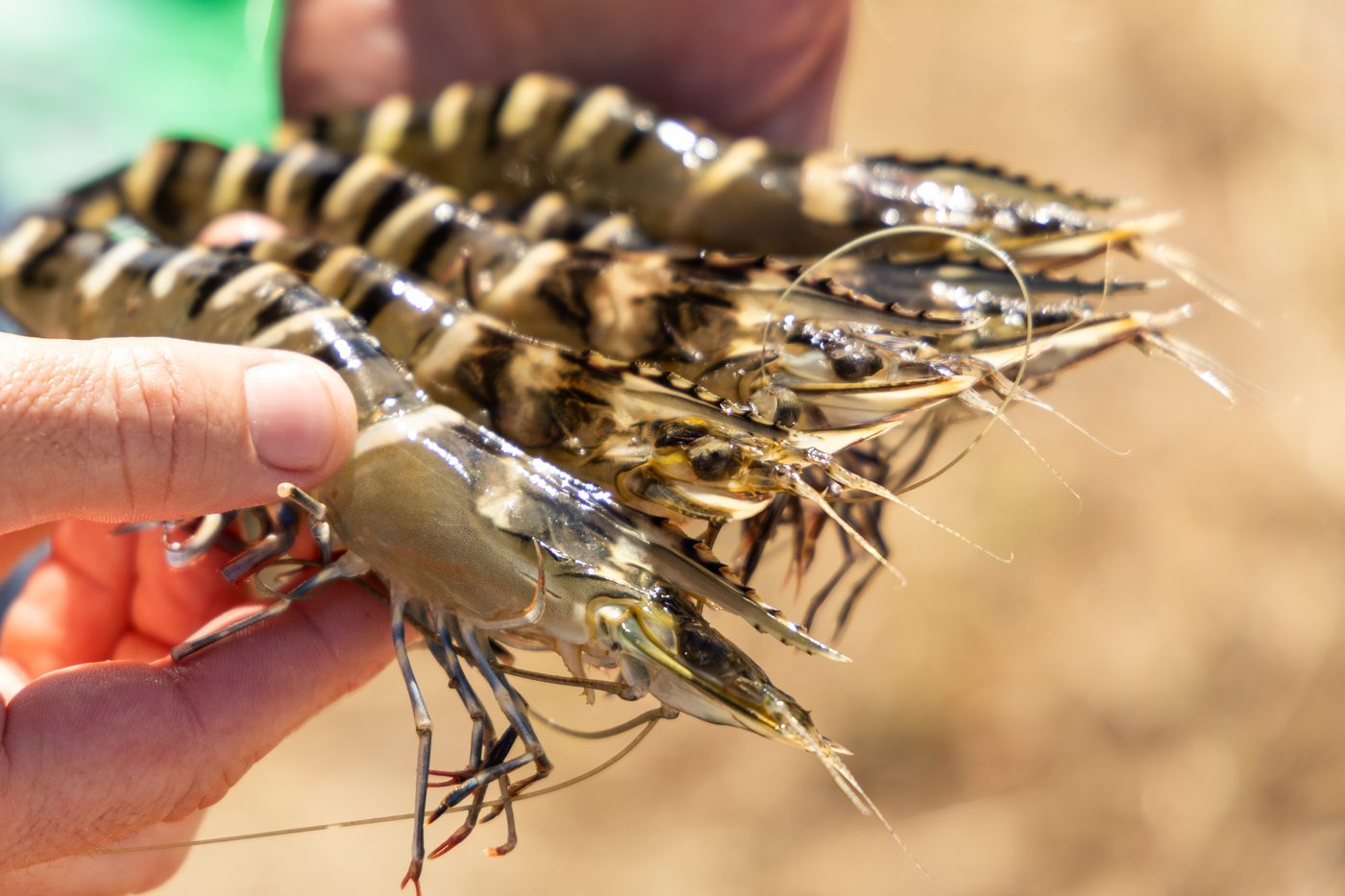
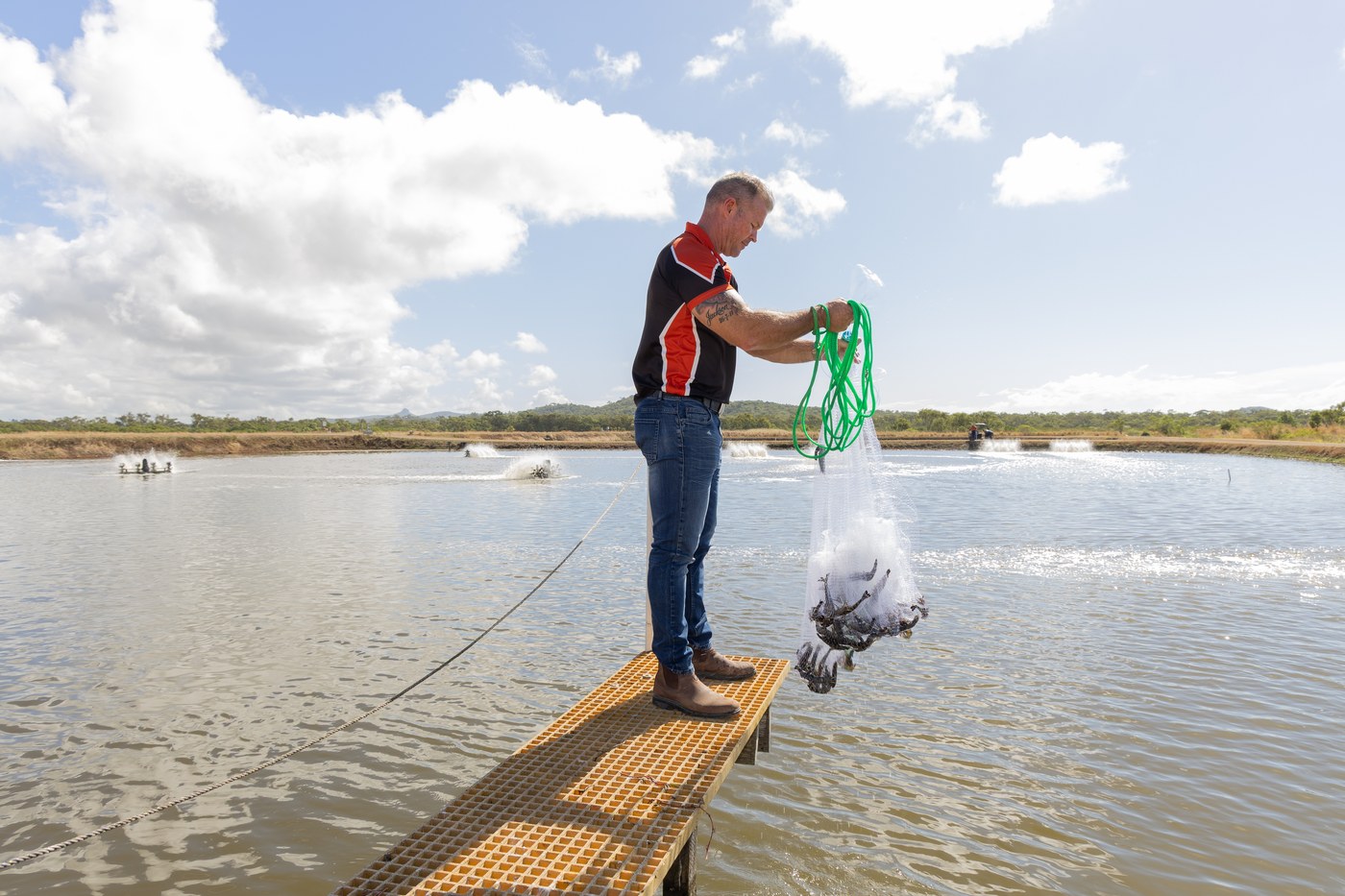
Left: fresh black tiger prawns from the net. Right: pulling the catch in.
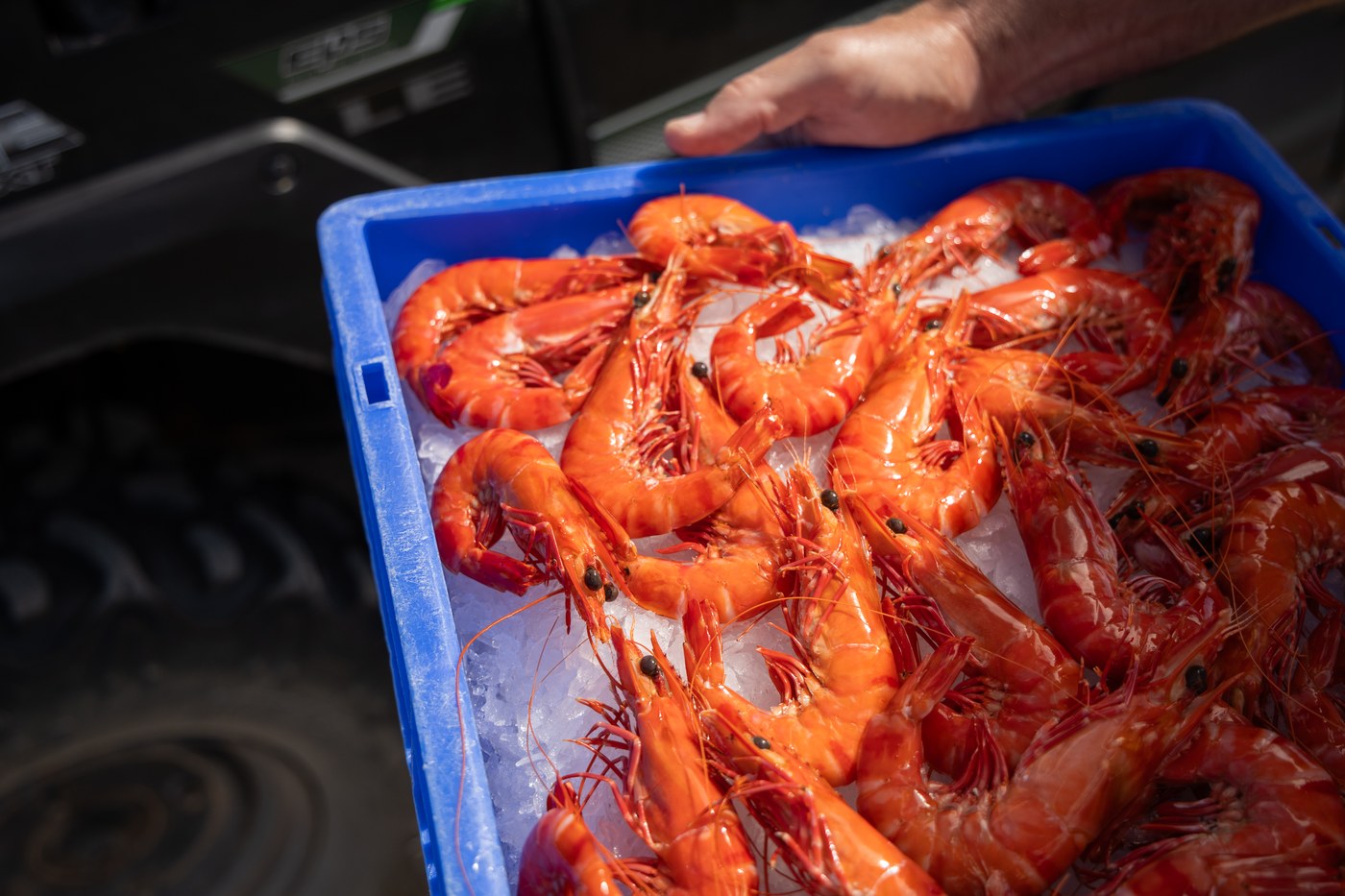
From net to cooking vat to tray. Cooked on site the same morning.
Why this kind of work matters
There's a category of commercial photography that doesn't get talked about much: supply chain documentation, ethical sourcing content, corporate sustainability imagery. It doesn't end up on advertising hoardings, but it matters. Companies like Coles use these images to make a real case to investors, customers and regulators that their supply chains are what they say they are.
For a photographer based in Central Queensland, this kind of work is particularly local. Australian Prawn Farms is an hour from my office in Mackay. The prawns they grow end up in Coles stores across the country. Getting images that tell that story honestly, without manufacture, is the job.
Commissioned by Coles.