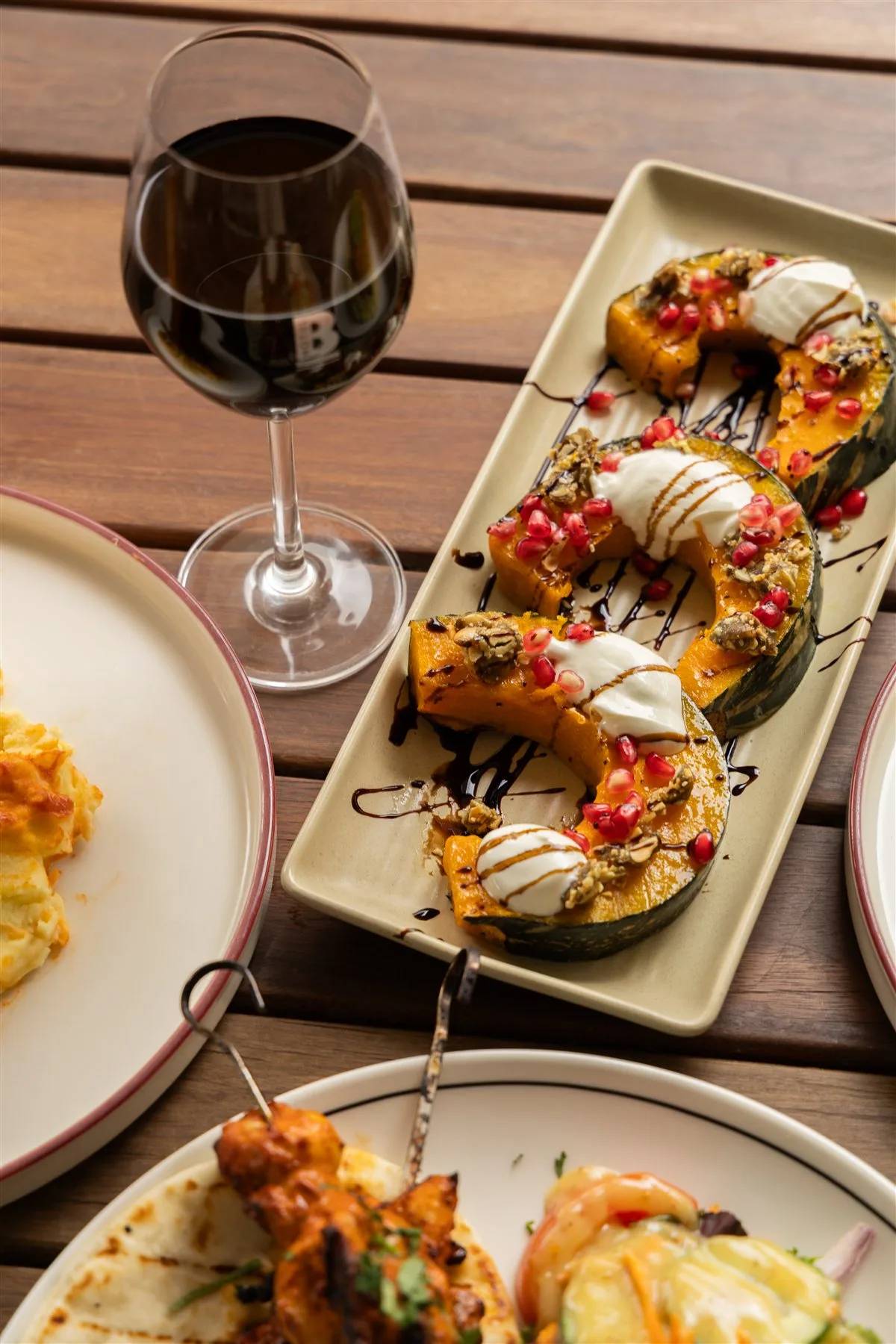
Most venues calling about food photography in Mackay know they need new images for the menu, the website, or their socials. What they are less sure about is why some food photos make people want to order the dish and others just look like a photo of a plate. That difference comes down to a handful of things you sort out on the day, not in the edit.
Here is what a food photography shoot actually involves, and why it works better for some venues than others.
When the call usually comes in
The bulk of my food photography work is for venues like Aus Venue Co properties, Boomerang Hotel, and Metropolitan. The shoots are almost always whole-menu jobs, and they are timed around a menu flip, when a venue changes its offering and every dish needs fresh images before the new menu goes live. That timing matters. It means the shoot has a hard deadline attached to it, and it means I am usually photographing the entire menu in one session rather than picking off a few hero dishes here and there.
A whole-menu shoot also changes the pace of the day. Kitchens are still running service around you, dishes come out in whatever order the kitchen can manage, and the shot list has to flex to match that rather than the other way around.
The real technical problem: lighting a dark venue
People assume the hard part of food photography is styling. In Mackay pubs and restaurants, the harder problem is almost always light. Most venues are deliberately dim, moody, and lit for atmosphere rather than photography, which means you are working against the room, not with it.
The classic example is beer. Pour a beer under venue lighting and you have a very short window before the head shrinks and the shot is gone. It has happened to me on shoots, standing there with a pint that looked perfect thirty seconds ago and now looks flat. You learn to have the camera and lighting dialled in before the pour happens, not after, because there is no second take on a head of beer.
"If it looks good to eat, it's good to photograph. Someone will disagree with me on that, but it's held up for me."
What a shoot actually covers
For a full menu shoot I am working through five categories on the day: overhead flat-lays, group shots, beverages, table settings, and individual dishes. Each one does a different job. The overhead flat-lay shows the full plate and portion clearly, which matters for menu boards and online ordering. Group shots sell the atmosphere of eating there with other people. Beverages get their own treatment because of the timing problem above. Table settings give the venue images that are about the room and the experience, not just the food. And individual dish shots are usually what ends up as the hero image, so those get the most attention on lighting and angle.
Running through all five in one session, across a full menu, is a long day. But it means the venue walks away with a complete, consistent set rather than a handful of standout shots and gaps everywhere else. It also means the images match each other in tone and lighting, which matters more than people expect when they end up side by side on a menu board or a website grid. Nothing looks worse than half a menu shot on a bright day two years ago and half shot last month under different lighting.
Photographing what Mackay actually eats
Mackay has a strong pub-classic culture, and crumbed steak and parma or parmi are as close to a local institution as food gets here. Laffos and Hotel Mackay both do a parma that gets talked about, and Boomerang, my most local local, is right up there too. Photographing that kind of food well means resisting the urge to style it like a capital-city food magazine shoot. A parma photographs best looking like the parma people actually order and eat, not a stylised version of one. That is part of why I think the simplest test holds up: if it looks good to eat, it photographs well. Overworking the styling usually makes food look less like food.
What venues get wrong before booking
The biggest misunderstanding is timing. Food photography works best fast, dish comes out of the kitchen, gets shot, and gets back to the pass or the table while it still looks like it just arrived. Venues sometimes expect a slower, more considered process, closer to a studio shoot, when in reality speed and readiness are what protect the shot.
The second misunderstanding is around styling and expectations of a "perfect" plate. Kitchens plate food to be eaten, not photographed, and that is generally a good thing. My job is to shoot it well as it comes out, with the lighting and angle doing the work, rather than asking the kitchen to change how they plate for the camera. A shoot day that respects how the kitchen actually runs gets better, more honest images than one that tries to slow everything down for the camera.
The third thing venues underestimate is how many separate variables are being juggled at once. Light is changing as the sun moves or the venue's own lighting cycles through the evening, dishes are arriving on their own schedule, and drinks have that short window before condensation or head loss ruins the shot. None of that is solved by more time on the day. It is solved by being set up and ready before the first dish lands, so the shoot moves at the kitchen's pace instead of asking the kitchen to move at mine.
Got a menu that needs new photos?
Tell me what's changing on the menu and when it's going live, and I'll build a shoot day around your kitchen's actual service. Based in Mackay, covering Central Queensland.
Start a Conversation →